
Ancient Egypt
Symbol · The Ancient World
Ankh
The Breath of Life
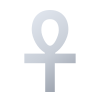
The Egyptian hieroglyph for 'life', a looped cross the gods hold to the king's nose to give him breath.
What it meansGods hold it to the king's nostrils in the reliefs — not to his hand or his heart. Life in Egyptian terms is breath given, and the sign is shown at the moment of transfer, which is why it is carried by the giver and never by the one receiving it.
Book · 16th century BCE
The Egyptian Book of the Dead
Ancient Spells, Modern Book
An ancient Egyptian collection of spells and guides to help the deceased safely navigate the underworld and pass the Weighing of the Heart.
SignificanceThe heart is weighed against the feather of maʿat, and spell 30B addresses the heart directly: do not stand as a witness against me. The judgement is real and the text supplies the countermeasure, inscribed on a scarab and laid on the chest.
The Finding"The Book of the Dead" is Lepsius's 1842 title for a repertoire of about 192 spells copied to order — no two papyri agree, and the numbering is his, not Egypt's.
Book · 24th century BCE
The Pyramid Texts
First Words Against Death
Words to carry a dead king skyward, trusted so literally that carved snakes were cut in two.
SignificanceThey were believed so literally that the hieroglyphs were disarmed: snakes carved without heads, birds cut in half, so the signs could not act inside the sealed chamber. Writing here is not a record of a spell — it is the spell, and it was treated as live.
The FindingThe Pyramid Texts, Coffin Texts and Book of the Dead are a real sequence, but the story that it shows the afterlife being democratised from king to commoner is a modern scholarly narrative — and Mark Smith (2009) and Harold Hays (2011) argue that the change it describes is not visible in the evidence.